Vacuum Graphite Furnace
- Max Temp:2400 °C
- Temp Measurement:W-Re thermocouple + infrared
- Heating Element:Graphite tube / felt
- Application:Metal & non-metal sintering, optical material purification
 Get Quote
 Send Email
-

Customized Vacuum Solutions
-

High Thermal Efficiency
-

Ultra-Clean Vacuum Environment
-

Stable & Repeatable Results
-

Industry-Grade Safety Design
Product Description
A vacuum graphite furnace is a high-performance, periodic-operation furnace that uses graphite as the heating element. It is designed to sinter and heat-treat metallic and inorganic non-metallic materials under vacuum or protective atmosphere conditions, and can also be used for roasting and purifying optical materials.
With an exceptionally high working temperature (up to 2400℃), a precision temperature-control system, and a stable vacuum environment, vacuum graphite furnaces are widely used in both R&D and the production of advanced ceramics, powder metallurgy, cemented carbide, carbon/carbon composites, optical crystals, and more.
Product Series
Brother Furnace offers two main series of vacuum graphite furnaces — Vertical and Horizontal — to meet diverse process requirements and production scales.
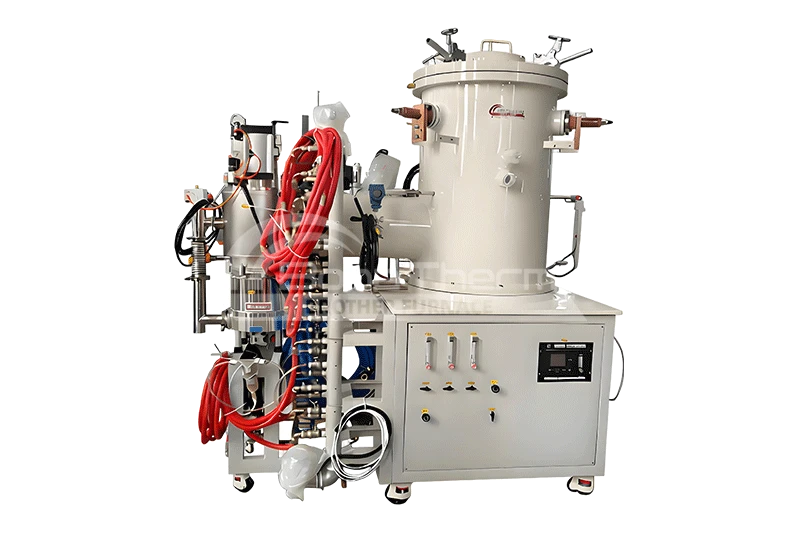
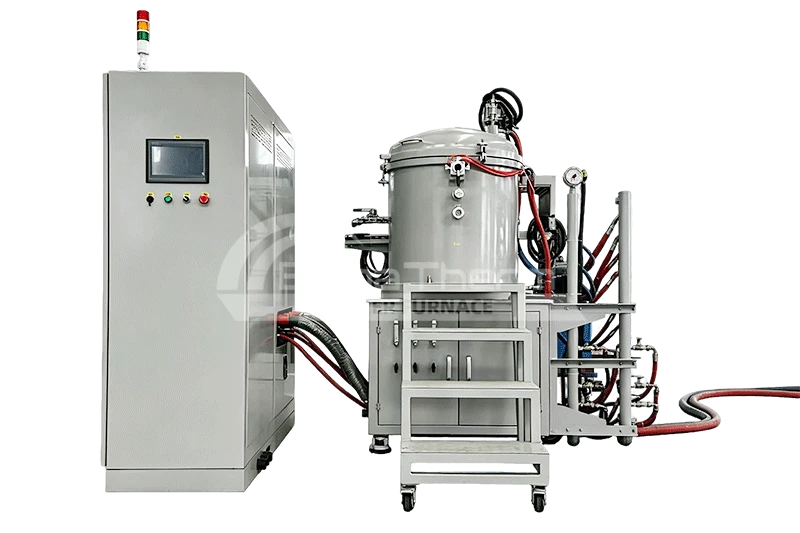
Vertical Vacuum Graphite Furnace
The vertical design is ideal for small-batch, high-precision sintering. Its compact chamber delivers fast, efficient heating.
Model | Heating Zone(Dia*H)mm | Work Temp(℃) | Power(kW) | Voltage(V) | Ultimate Vacuum(Pa) |
BR-18STV-40 | Φ160×160 | 1800 | 35 | 380 | 6.67×10⁻³ |
BR-18STV-50 | Φ200×300 | 1800 | 60 | 380 | 6.67×10⁻³ |
BR-22STV-40 | Φ160×160 | 2200 | 50 | 380 | 6.67×10⁻³ |
BR-22STV-50 | Φ200×300 | 2200 | 90 | 380 | 6.67×10⁻³ |
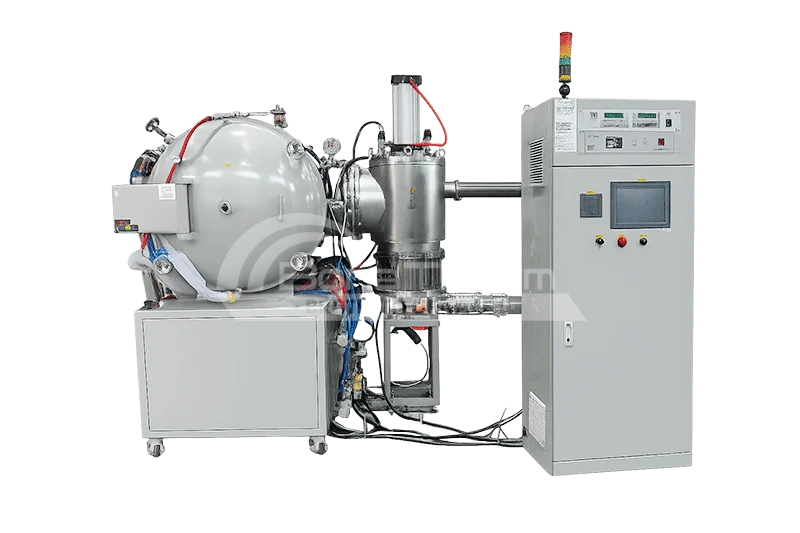
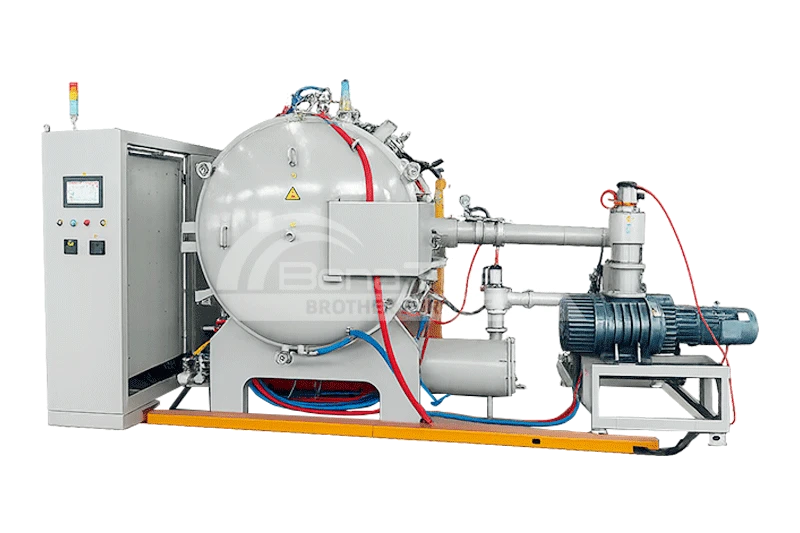
Horizontal Vacuum Graphite Furnace
The horizontal design features front-opening and rear-opening door options for easy loading and unloading, making it well-suited for batch production and larger workpieces.
Model | Heating Zone(W*H*D)mm | Work Temp(℃) | Power(kW) | Voltage(V) |
BR-18GVF-223 | 200*200*300 | 1800 | 60 | 380 |
BR-18GVF-334 | 300*300*400 | 1800 | 100 | 380 |
BR-18GVF-446 | 400*400*600 | 1800 | 160 | 380 |
BR-18GVF-557 | 500*500*700 | 1800 | 220 | 380 |
BR-18GVF-669 | 600*600*900 | 1800 | 300 | 380 |
Model | Heating Zone(W*H*D)mm | Work Temp(℃) | Power(kW) | Voltage(V) |
BR-22GVF-223 | 200*200*300 | 2200 | 85 | 380 |
BR-22GVF-334 | 300*300*400 | 2200 | 150 | 380 |
BR-22GVF-446 | 400*400*600 | 2200 | 235 | 380 |
BR-22GVF-557 | 500*500*700 | 2200 | 315 | 380 |
BR-22GVF-669 | 600*600*900 | 2200 | 425 | 380 |
Product Highlights
Ultra-High Temperature Performance
Graphite heating elements provide uniform heat distribution and outstanding thermal stability, reaching a maximum working temperature of 2400℃ to satisfy the most demanding sintering processes.
Double-Layer Water-Cooled Shell
The furnace shell features a polished stainless steel inner layer and a carbon steel outer layer, with a double-layer water-cooling structure in between. This effectively prevents heat transfer to the exterior, ensuring equipment integrity and operator safety.
Composite Carbon Fiber Insulation Chamber (Horizontal Series)
The horizontal series uses a composite chamber made from imported graphite soft felt and hard felt, forming a carbon fiber thermal insulation structure with superior heat retention and significantly reduced energy consumption.
Dual Temperature Measurement System
Both a W-Re (Tungsten-Rhenium) thermocouple and an infrared thermometer are employed for temperature monitoring. The W-Re thermocouple automatically extends into and retracts from the furnace chamber, ensuring measurement accuracy and reliability across a wide temperature range.
Intelligent Control System
HD touch screen HMI with a built-in operating system developed in-house
PLC fully automatic control with multi-segment programmable heating profiles
Intuitive operation with convenient storage and recall of process parameters
Observation Port
An observation window on the furnace shell allows operators to monitor the heating status inside the chamber at any time without interrupting the process.
Flexible Door Design (Horizontal Series)
Both front-opening and rear-opening door configurations are available to accommodate different production line layouts, significantly improving loading and unloading efficiency.
Typical Applications
Powder Metallurgy & Cemented Carbide
Advanced Ceramics
Carbon/Carbon Composites
Optical Materials
New Energy Materials
Research Institutions