



 View more

 Send Email
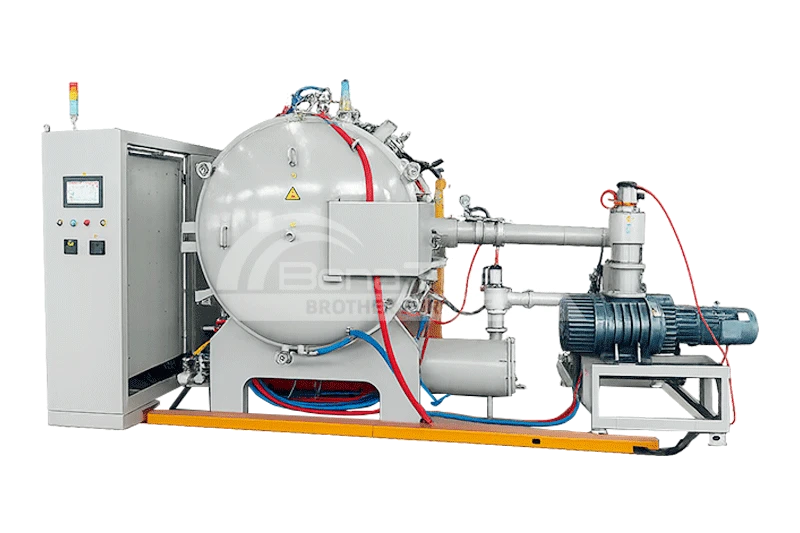
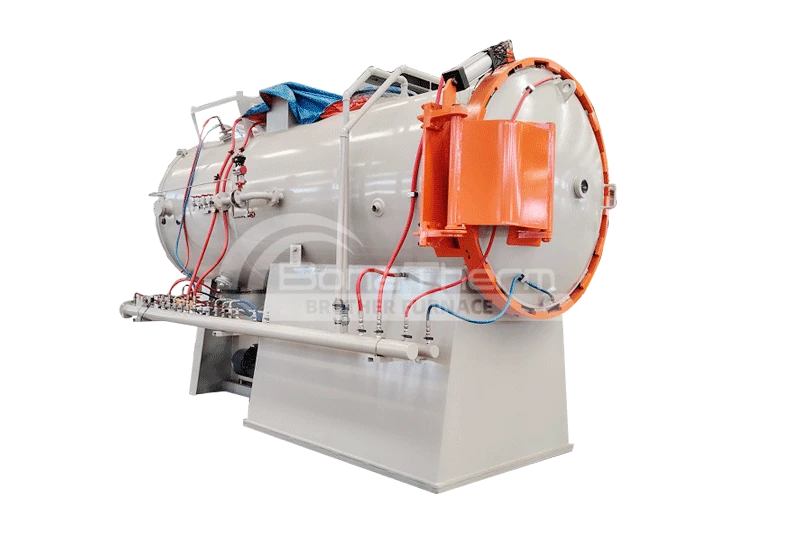
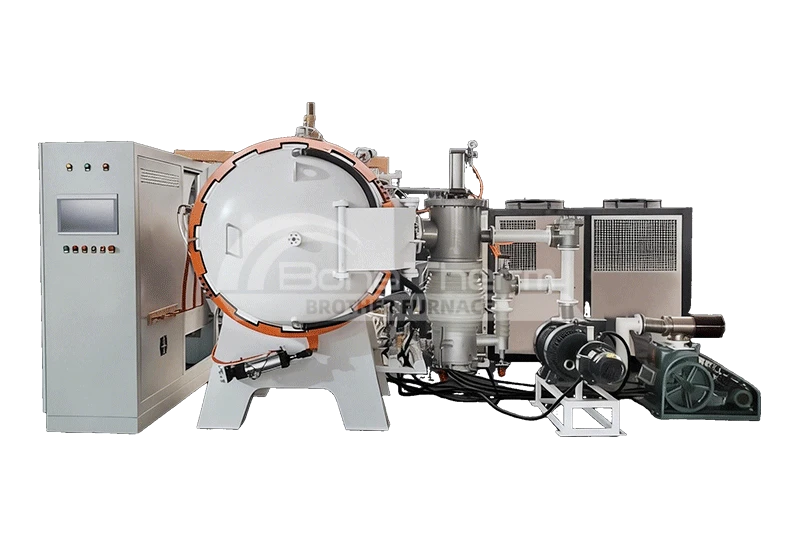

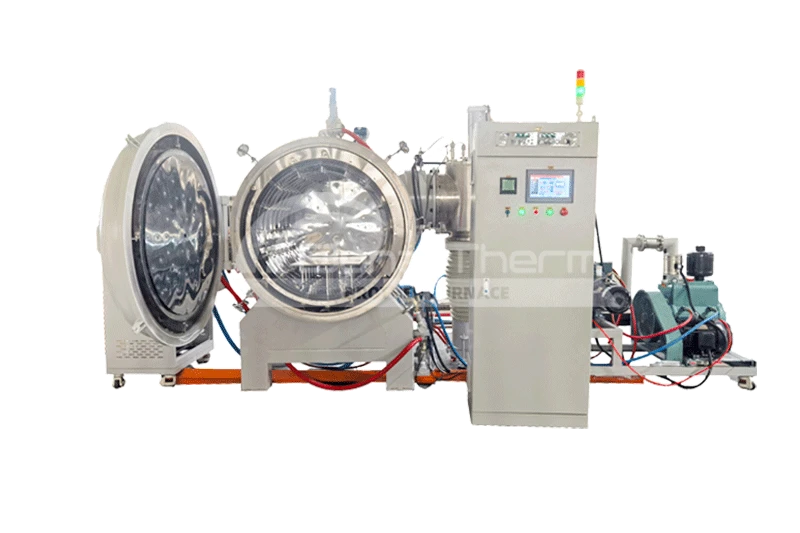
Bright Surface • Uniform Hardness • Minimal Distortion
- Ultra-Clean Processing Environment
- Uniform & Precise Thermal Management
- Rapid & Efficient Quenching System
- Mold steel, tool steel, high-speed steel, titanium alloy treatment, TC4, medical devices

Configurable
Technical Parameters
Tailor the furnace configuration to meet your specific process requirements, including size, vacuum level, heating elements, and atmosphere control
-

Chamber size
-

Vacuum level
-

Heating elements
-

Atmosphere control
Size
Type
Options
Materials
Atmospheres
Method
Chamber Size
| Minimum | Highest |
|---|---|
| 100 × 100 × 100 mm | 800 × 800 × 3000 mm |
Vacuum System Type
- Rotary Pump (up to 10 Pa)
- Roots Pump (500 Pa – 0.1 Pa)
- Diffusion Pump (10 – 0.006 Pa)
- Turbomolecular Pump (≤ 0.006 Pa)
Heating Element Options
- Resistance Wire (up to 1200°C)
- SiC Elements (1600–1800°C)
- MoSi₂ Heaters (up to 1400°C)
- Graphite (up to 2200–2300°C)
- Molybdenum (up to 1600°C)
- Tungsten (up to 2500°C)
Hot Zone Materials
- Heat-Resistant Steel
- Graphite
- Ceramic Fiber (Al₂O₃)
- Tungsten
- Molybdenum Foil
- Induction Melting Coil (Copper)
Available Atmospheres
Loading Method
- Front Loading
- Bottom Loading
- Top Loading
- Automatic Loading
Key Advantages of Vacuum Quenching Furnace

No Oxidation & No Decarburization
Bright and clean workpiece surfaces, reducing the need for post-processing

High Hardness Uniformity
Precise temperature control ensures consistent microstructure and performance

Minimal Distortion
Gas quenching effectively reduces deformation and cracking risks

Energy Efficient Operation
Optimized insulation design reduces energy consumption

Energy Efficient Operation
Optimized insulation design reduces energy consumption

Wide Material Compatibility
Suitable for tool steel, die steel, stainless steel, titanium alloys, etc

Flexible Process Control
Supports programmable multi-stage heating and cooling profiles

Stable Vacuum Performance
Consistent vacuum level ensures reliable heat treatment quality
Frequently
Asked Questions

What are the advantages of vacuum quenching?
Vacuum quenching offers: No oxidation or decarburization Minimal deformation High surface finish Stable heat treatment quality Lower post-processing costs Ideal for precision parts
Can the furnace process large workpieces?
Yes. The furnace chamber can be customized for different workpiece sizes, including: Single chamber Double chamber Horizontal type Vertical type
How good is the temperature uniformity of the vacuum quenching furnace?
Temperature uniformity is typically within ±5°C, and up to ±3°C for higher configurations.
Does the vacuum quenching furnace support automatic control?
Yes. Standard features include: PLC control Touchscreen operation PID temperature control Data recording Remote monitoring (optional)
Is the energy consumption of a vacuum quenching furnace high?
Compared with conventional furnaces: Higher thermal efficiency Lower heat loss Better long-term operating cost performance
From Design to Delivery —
One-Stop Furnace Solutions
- Submit your requirements; customize furnace size, temperature, and atmosphere based on materials
- Provide a practical, executable technical solution
- Production after solution confirmation
- For standard models in stock, immediate shipment is available
- Strict testing to ensure temperature, vacuum, and control performance meet specifications
- On-site installation or installation guidance
- Operator training and fast after-sales support
- Standard warranty and long-term spare parts supply
