Multi-Zone Tube Furnace System Solutions for CVD, Sintering, and Annealing Processes
- By: Brother Furnace
- /
- Jul 23,2026
Overview
The tube furnace is a fundamental piece of equipment in materials synthesis and thermal processing, widely used in chemical vapor deposition (CVD), vacuum sintering, atmosphere-controlled annealing, and powder calcination processes. Requirements for the number of heating zones, temperature control accuracy, atmosphere type, and vacuum level vary depending on the specific process, and equipment selection should be matched to the actual process parameters. This document outlines a typical configuration for a multi-zone tube furnace system and its applicable process range, intended as a reference for equipment selection and process design.
System Structure and Technical Features
Heating and Temperature Control System
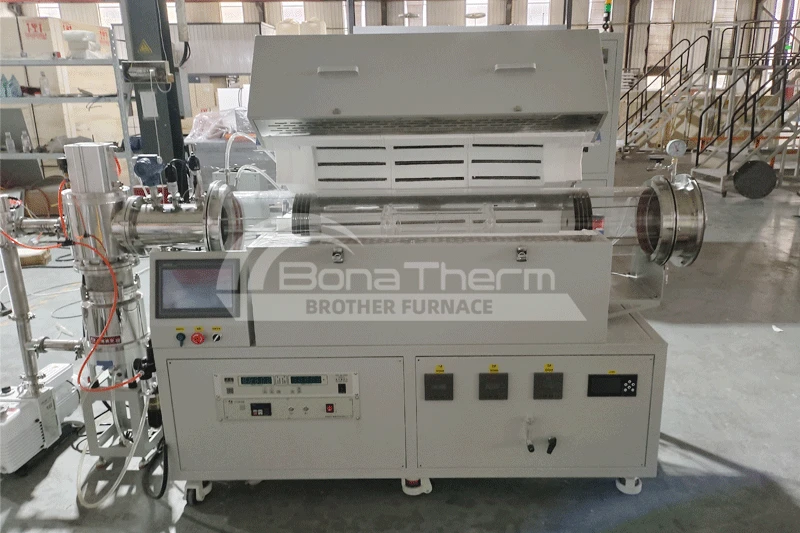
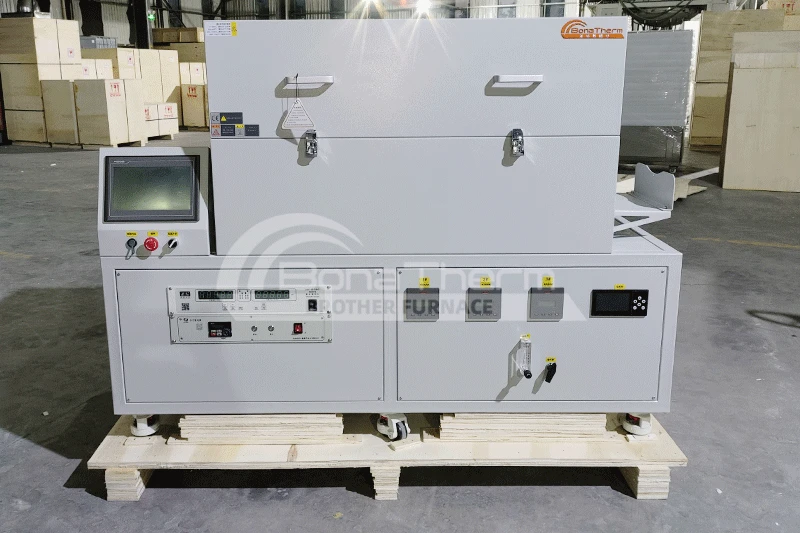
The system uses a multi-segment independent heating zone design (typically 3 zones or more), with each zone equipped with an independent thermocouple feedback loop and PID control. This enables staged heating/cooling and temperature gradient programming — suitable for processes requiring defined axial temperature distribution along the quartz tube, such as differentiating the precursor decomposition zone from the deposition zone in CVD growth.
Furnace Tube and Sealing Structure
The furnace tube is typically made of high-purity quartz, with stainless steel flanges and sealing gaskets at both ends to withstand a certain vacuum level and support atmosphere switching. The transparency of the quartz tube also allows visual observation during the process. Tube dimensions, wall thickness, and length should be determined based on sample specifications and process requirements.
Gas Flow and Vacuum System
The system integrates a vacuum pump, gas mass flow controllers (or rotameters), pressure gauges, and solenoid valves to form a complete loading–evacuation–gas introduction–reaction process chain. It supports inert gas protection, reducing atmospheres, or reactive gas input; specific gas line configuration should be designed according to the type of process gas and safety requirements.
Control System
The system is equipped with a touchscreen human-machine interface (HMI) that supports multi-segment temperature ramp programming, parameter storage, and recall of process recipes, reducing manual intervention and improving batch-to-batch process repeatability. The control panel also includes an emergency stop button, alarm indicators, and safety interlocks in line with standard industrial equipment safety practices.
Applicable Process Range
Process Type | Typical Applications |
CVD (Chemical Vapor Deposition) | Thin film growth; synthesis of nanomaterials (e.g., carbon nanotubes, graphene) |
Vacuum / Atmosphere Sintering | Ceramic powder, metal powder metallurgy |
Annealing | Dopant diffusion, stress relief, crystal structure adjustment |
High-Temperature Calcination | Precursor processing for lithium battery cathode/anode materials |
Key Parameters to Define During Selection
Before finalizing a specific tube furnace configuration, it is recommended to clarify the following process parameters to enable a targeted design:
Maximum process temperature and ramp/cool rates required
Number of heating zones and temperature gradient requirements per zone
Whether a vacuum environment is required, and the target vacuum level
Gas type(s) used (inert / reducing / reactive) and flow rate range
Furnace tube inner diameter, effective heated length, and sample dimensions
Whether continuous or batch processing mode is required
If you are selecting a tube furnace or designing a thermal processing solution, please provide the process parameters above and consult with Brother Furnace — we will provide a corresponding technical solution based on your specific requirements.