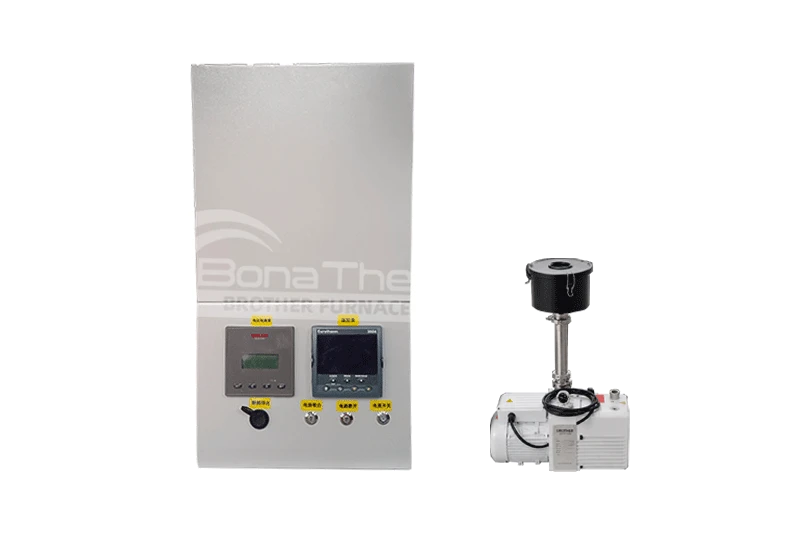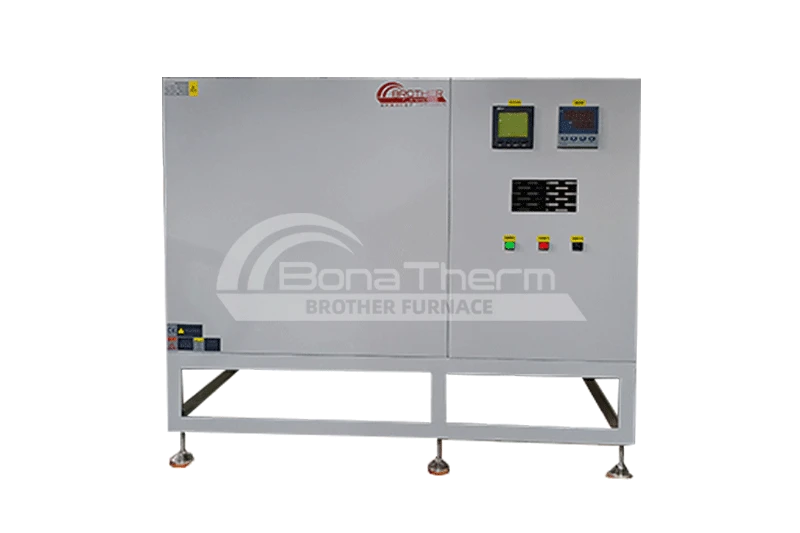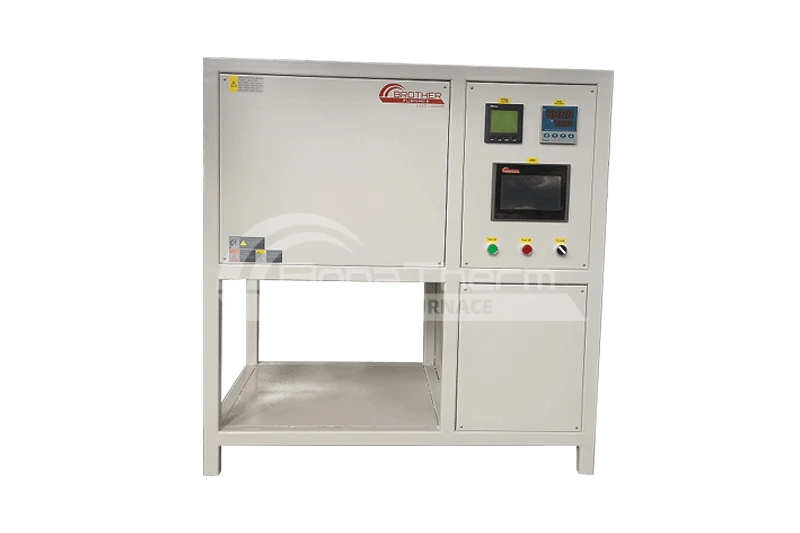
Crucible Melting Furnace
- Max Temp:1700℃
- Working Zone:100×100×100 mm ~ 1000×1000×1000 mm (1 ~ 1000 L)
- Certification:CE / ISO 9001 certified
- Application:Vacuum melting, sintering and heat treatment of metals, alloys, ceramics and advanced materials
 Get Quote
 Send Email
-

Customized Vacuum Solutions
-

High Thermal Efficiency
-

Ultra-Clean Vacuum Environment
-

Stable & Repeatable Results
-

Industry-Grade Safety Design
Product Description
High-temperature crucible melting furnace are suitable for major universities, scientific research institutes, industrial and mining enterprises, etc. in powder, metallurgy, ceramics, glass, new materials and other fields.
PID automatic temperature control system, the maximum temperature can reach 1700℃.
Furnace shell is made of high-quality carbon steel, which is strong and durable; the double-layer air-cooled shell ensures safe use; furnace chamber is made of imported composite alumina polycrystalline fiber material, which has the advantages of strong thermal shock resistance, strong corrosion resistance and long service life;
At the same time, independent over-temperature protection, over-voltage, over-current, leakage and short-circuit and other protection systems are adopted.
Technical Specifications(Customization available)
Item | Specification |
Furnace Type | Box Type Crucible Melting Furnace |
Maximum Temperature | 1700℃ |
Working Temperature | 1600℃ |
Temperature Control | PID Automatic Temperature Control |
Temperature Accuracy | ±1℃ |
Heating Element | MoSi₂/ SiC / Resistance Heating Element |
Furnace Chamber Material | Alumina Polycrystalline Fiber |
Chamber Structure | Front-Opening / Top-Loading Crucible Chamber Design |
Crucible Capacity | According to Crucible Size |
Heating Zone | Customized according to requirements |
Furnace Shell Material | High Quality Carbon Steel |
Insulation Material | High Performance Ceramic Fiber |
Heating Rate | ≤30 min (depending on model and temperature) |
Temperature Uniformity | ±5℃ |
Cooling Structure | Double Layer Air Cooling System |
Safety Protection | Over-temperature, Over-voltage, Over-current, Leakage and Short-circuit Protection |
Application | Metal Melting, Alloy Melting, Ceramic, Glass and New Material Research |